• About
    • Who We Are
    • What We Do
    • Our People
    • Report
    • Partners
    • Vacancy
  • Program
    • fonaFood & Nature
      • Tropical Forest Alliance
        • Newsletter TFA
        • Smallholder Taskforce Meeting TFA
      • Business for Nature
      • Nature Valuation
      • Food Loss and Waste
        • GRASP 2030
      • Sustainable Food System
    • peopPeople
      • Social Life Cycle Assessment (S-LCA)
      • IBCSD Green Lifestyle Program
      • Business and Human Right
      • Greener Business Better Workplace
      • Children’s Right & Business Principles
      • Conflict Resolution Unit (CRU)
      • Forestry Forum
    • clienClimate & Energy
      • Natural Climate Solutions
      • PASTI
    • revalRedefining Value
      • Indonesia Vision 2050
      • Sustainability Management and Reporting
      • Reporting Exchange
    • ciecCircular Economy
    • bannerAsset-1programCities and Mobility
  • Media
    • Covid 19
    • Member Update
    • News & Insight
    • Publications
    • Resources
    • Events
  • Membership
    • IBCSD Member
    • Benefit of Membership
    • Becoming A Member
  • Hub
    • GRASP 2030
    • Green Lifestyle Initiative
    • Net Zero Emission
  • Contact
    • Search
      Generic filters
Home / News & Insights / Local Action to Global Impact: Scaling Solutions in Tackling Food Loss and Waste for Climate, Nature and People

Local Action to Global Impact: Scaling Solutions in Tackling Food Loss and Waste for Climate, Nature and People

GRASP 2030, a public–private platform initiated by IBCSD to tackle food loss and waste (FLW) in Indonesia, participated in the Food Pact Network Connect held in Sao Paulo, Brazil, on 26-30 January 2026. The Food Pact Network convened by WRAP currently consists of members from nine countries, including Australia, Brazil, Indonesia, Mexico, the Netherlands, New Zealand, South Africa, the UK and the US.

This year’s theme for Food Pact Network Connect 2026 is Local Action to Global Impact: Scaling Solutions to Tackle Food Loss and Waste for Climate, Nature, and People. The objectives of this annual meeting are to have stronger ties between the Food Pact Network members and build bolder ambitions to scale global influence and impact in tackling FLW at local levels; to understand what we need to do and how to do it to get business really driving food waste reduction across network; as well as how we can scale up our impact in tackling food loss and waste across the globe.

Although each Food Pact has unique dynamics in its operation, it is clear from the sharing session that each Food Pact has created real impacts in the efforts to reduce food loss and waste at local level. Some major achievements include more companies from various sectors recruited as signatories and have commitment to reduce FLW in their respective business. In Indonesia itself, GRASP 2030 has grown from nine signatories when it was established in 2021 to 46 in 2025, in which 18 of them are companies from different sectors: primary producers, manufacture, retails, hospitality and food services.

Another common success story among Food Pact Network members is the adoption of Target-Measure-Act (TMA) approach by companies, which has led to significant economic, environmental and social benefits. Evidence shows companies that consistently measure their food waste and implement their data-driven reduction resulting in cost savings through improved efficiency, emissions reduction by diverting food waste from landfill, and social impact through the food surplus redistribution to those in need. For example, New Zealand Food Pact shared that their FLW initiative has led to the reduction of 85% of food waste sent to landfill from baseline; 12% of unsold food reduced; and more than 50% of edible food saved through redistribution.

To scale up FLW impacts, the Food Pact Network members are also facing various challenges. Among these are convincing new companies to begin measuring their FLW data and implement the reduction plan through the TMA approach. Encouraging citizens to reduce FLW through positive behaviour, such as mindful consumption and food redistribution also remains a challenge. Another shared challenge is lack of long-term funding for the Food Pacts to sustain and scale up engagement and technical support to companies in tackling their FLW aligning with SDG 12.3.

Food Pact Network also sees that the scaling of FLW impact requires policy support. A number of Food Pacts have been working closely with government partners to address the FLW issues across the value chains. UK Pact, for example, consistently provides policy recommendations to incentivise businesses to measure and take action to prevent food waste and reduce household food waste by connecting household prevention with separate collections. For this purpose, GRASP 2030 has also established a Policy Working Group to strengthen policy support as a game changer to scale FLW impacts in Indonesia.

Stronger collaboration among Food Pacts is necessary to enhance local actions to scale up global impact. Following a week of engagement in Brazil, the Food Pacts agree to have productive collaboration in three strategic areas. The first is the development of the value proposition and ROI resource suite for signatories’ recruitment and retainment. The second is to build Food Pact knowledge commons by developing a shared global resource and research repository for the Food Pact Network. And the third is to develop ad hoc expert groups that will work on specific FLW issues, such as citizen engagement, hospitality and manufacturing sectors, best practice labelling, etc.

Published on: January 26, 2026
By: Nurina Izazi
Content type: News & Insights
Content tag:

More Content

  • show all (100)
  • Vacancy (74)
  • Covid -19 (10)
  • Member Update (100)
  • Request for Proposal (33)
  • Video (28)
  • Publication (59)
  • Resource (27)
REQUEST FOR PROPOSAL (RFP) Development of Knowledge Publication on Jurisdictional Approach for Market Compliance and Sustainable Finance
Request for Proposal Vacancy
Read More
REQUEST FOR PROPOSAL (RFP) Development of a Publication on Forest-Positive Financing for MSMEs in Indonesia Circulated by: 15 June 2026
Request for Proposal Vacancy
Read More
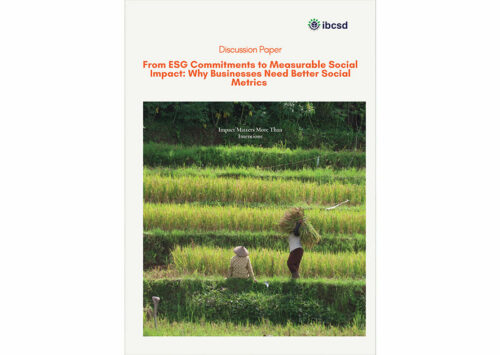
From ESG Commitments to Measurable Social Impact: Why Businesses Need Better Social Metrics
Resource
Read More
Consultant Services for the Development of National Competency Standards (SKKNI) on Resource Efficient and Clean Production (RECP)
Request for Proposal Vacancy
Read More
Request for Proposal Position: Monitoring, Evaluation, and Reporting (MER) Consultant.
Request for Proposal Vacancy
Read More
Request for Proposal (RFP) Development of Analytical Paper on Strengthening Indonesian Sustainable Palm Oil (ISPO) Governance
Request for Proposal Vacancy
Read More
KIRANAS – Indonesia Business Action Plan for Biodiversity 2026–2028
Resource
Read More
Request for Proposal: Website Revamp IBCSD
Vacancy
Read More
Load More

Copyright © 2013-2022
Indonesia Business Council for Sustainable Development

All rights reserved

Developed and maintained by EvolutionTeams

CONTACT

IBCSD Secretariat
Menara Duta Building
7th Floor Wing B
Jl. HR. Rasuna Said B-9
Jakarta 12910
Tel (+6221) 52901941/42
Fax (+6221) 5290-1949
email : [email protected]

FOLLOW US

  • Home
  • About
    • Who We Are
    • What We Do
    • Our People
    • Report
    • Partners
    • Back
  • Program
    • Food & Nature
    • People
    • Climate & Energy
    • Redefining Value
    • Circular Economy
    • Cities and Mobility
    • Back
  • Media
    • Covid 19
    • Member Update
    • News & Insight
    • Publications
    • Resources
    • Events
    • Back
  • Membership
    • IBCSD Member
    • Benefit of Membership
    • Becoming A Member
    • Back
  • Hub
    • GRASP 2030
    • Green Lifestyle Initiative
    • Net Zero Emission
    • Back
  • Contact