Their zero waste pallets are made from 100% waste plastic using Re>Pal’s unique ThermoFusion™ technology process. Their pallets offer businesses improved profitability while acting sustainably through leveraging the low energy, environmentally friendly, and a cost-effective solution.
Re>Pal manages and supplies its superior pallets to many global and domestic suppliers, including Unilever, IndoFood, Nestle and IFF — businesses interested in offsetting their carbon footprint without compromising on quality or profitability.
An independent life cycle assessment conducted by Edge Environment research company has demonstrated that Re>Pal pallets have the lowest environmental impact when compared with functionally equivalent pallet alternatives.
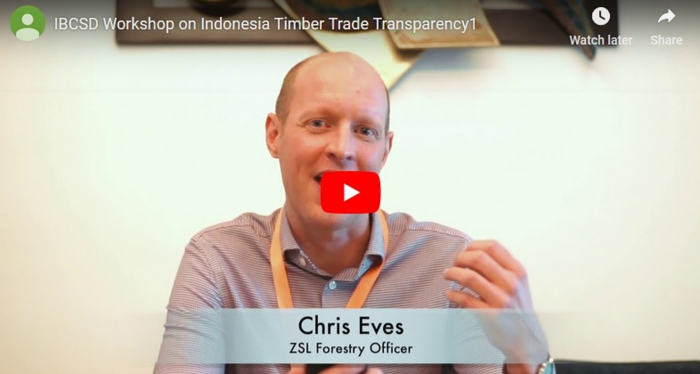
Sigit Pramono, Head of Sub-Directorate for Notification of Export and Import of Industrial Forest Products, Ministry of Environment and Forestry said that the transparency in the implementation of timber legality assurance system in Indonesia has improved significantly, despite rampant illegal logging in the past. “Export value of certified wood products increased from USD 6.1 billion (2013) to USD 12.13 billion in 2018”, said Sigit Pramono.
Head of Footprint and Social Compliance, PT APP Sinarmas, Sera Noviany shared the private sector commitment for transparency in the pulp and paper industry. “Transparency is important to foster trust from our stakeholders”, said Sera. NGOs have also contributed to the improved transparency of the Indonesia forestry sector. Mohamad Kosar (JPIK) underlined the room for improvement in the public access on the forestry sector data. Teguh Triono (ZSL Indonesia) shared the piloting on integrated landscape management for sustainability through KELOLA Sendang Project. And Chris Eves (ZSL London) promoted SPOTT online platform consisting 131 detailed indicators to assess timber and pulp producers and traders on the public disclosure of their policies, operations and commitments to environmental, social and governance best practices.
The event report, can be downloaded at the bottom of this page: https://www.spott.org/
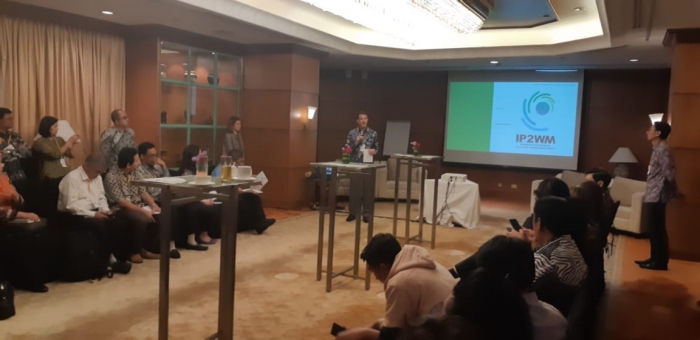
This partnership itself has a Vision and Missions as stated below:
Vision
• To be the Indonesian national public-private partnership (PPP) to support Indonesia government goals on plastic waste management through applying the principles of circular economy
Mission
• Support the establishment of effective waste management system
• Raise people’s awareness towards behavioral change through education and communication
• Leverage research & development, innovation, and technology, especially through the principles of circular economy
• Support the study of Indonesian national plastic and waste management databases
• Seek innovative financing options to be an enabler of achieving the vision
• Collaborate in the Indonesia national formulation of relevant policy, law, and regulations in coping with plastic waste issue
To learn more about the partnership and initiatives, please check out the document below:
SME Magazine itself is the highest-circulated publication for SME news across South East Asia. Its success has enabled the establishment of a myriad of events under its banner, extending from forums, exhibitions to awards on international platforms. Over the years, they have established a healthy working relation with business enterprises, associations and public-sectors, exploring flexible arrangements tailored to different interests.
If you’re interested to in this awards, please contact SME Magazine’s senior project executive, Ms. Esther Gloria at [email protected] . The nomination form can be found in the nomination kit below.
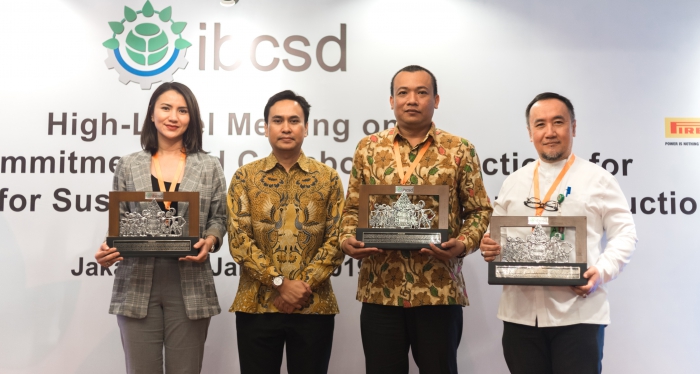
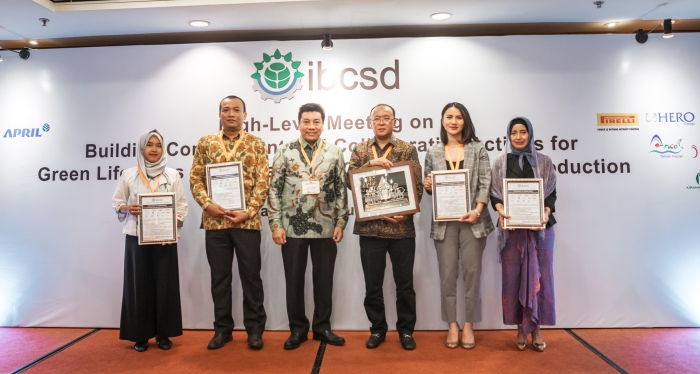
Chairman of IBCSD, Sihol Aritonang, in his opening speech shared major conclusion from the IBCSD-supported study on green lifestyles program. “From private sector perspective, sustainable consumption and production like two sides of the same coin can be achieved by two collaborative movements: equipping the capacity of the internal supply-chain to adopt sustainable principles (upstream level) and educating consumers to choose ‘green’ products (downstream level)”, said Sihol Aritonang.
Dr. Ir. Arifin Rudiyanto, Deputy Minister for Maritime and Natural Resources on behalf of Minister of National Development Planning (Bappenas) in his keynote speech said, “There are still challenges on how to translate sustainable consumption and production into the national and regional development agenda.”
To trigger more innovative ideas on what sustainable consumption and production means in practice, the panel discussion moderated by Budi Santosa, IBCSD Director Executive involved three resource persons: Ir. Noer Adi Wardojo, M.Sc, Head of Center for Environment and Forestry Standards, Ministry of Environment and Forestry; Melanie Masriel, Agung Baskoro, Sustainability Manager of Cargill Indonesia. “Not only talking about sustainable consumption and production, but we also need to walk the talk. We need to do a systemic, inclusive and massive implementation on sustainable consumption and production”, said Noer Adi from Ministry of Environment and Forestry. Melanie Masriel and Agung Baskoro shared best practices from their companies on the implementation of sustainable consumption and production on the ground. “Sustainability is at the heart of our business. We have very strong commitment to achieve it by doing sustainable production in our business value chain”, said Melanie Masriel. Agung Baskoro said, “Sustainable profit has to come from responsible business first. Socially responsible products will bring far better goods to all of us.”
As their tagline “We create chemistry”, they tend to create chemistry for a sustainable future
They want to contribute to a world that provides a viable future with enhanced quality of life for everyone. They do so by creating chemistry for our customers and society and by making the best use of available resources. BASF has live their corporate purpose “We create chemistry for a sustainable future” by sourcing and producing responsibly, acting as a fair and reliable partner, connecting creative minds to find the best solutions for market needs.
With the “We create chemistry” strategy, BASF has set itself ambitious goals in order to strengthen its position as the world’s leading chemical company.
They updated our sustainability goals to this effect in 2015 and aligned them along the entire value chain. They responsible procurement.
They design their production to be efficient and safe for people and the environment. They treat both our employees and our partners with respect and fairness. And they also drive sustainable products and solutions.
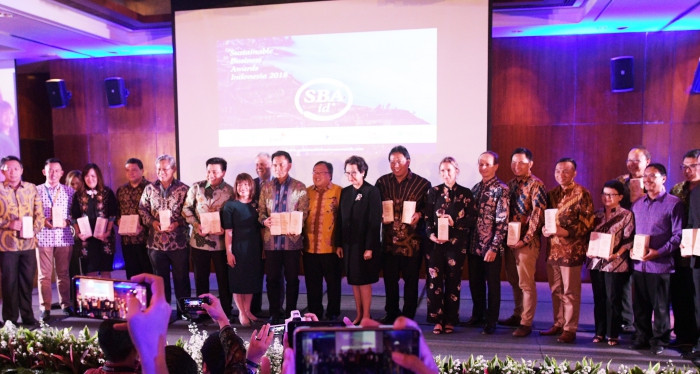
Here are the list of the winners:
Overall winner – Vale Indonesia
Winners of Sustainability Categories:
Best, Strategy & Sustainability Management – Holcim
Special Recognition, Strategy & Sustainability Management – Bayer Indonesia
Best Workforce – Vale Indonesia
Special Recognition, Workforce – Trakindo Utama
Best Sustainability in the Community – Corteva Agriscience
Special Recognition, Sustainability in the Community – United Tractors
Best Energy Management – Pertamina
Special Recognition, Energy Management – Ispat Indo
Best Water Management – Multi Bintang
Special Recognition, Water Management – Asia Pulp and Paper
Best Waste and Material Productivity – Multi Bintang
Special Recognition, Waste and Material Productivity – Kreskros
Best Supply Chain Management – H&M Indonesia
Special Recognition, Supply Chain Management – Astra International
Best Land Use and Biodiversity – Rimba Makmur
Special Recognition, Land Use and Biodiversity – Chevron Indonesia
Best Business Responsibility & Ethics – Vale Indonesia
Special Recognition, Business Responsibility & Ethics – APRIL Group
Best Stakeholder Engagement & Materiality – Asia Pulp and Paper
Special Recognition, Stakeholder Engagement & Materiality – Pertamina
Best UN SDGs – APRIL Group
Special Recognition, UN SDGs – Pertamina
Winners of Special Categories:
Best Newcomer – Cargill
Best Flagship Initiative – Astra International
Special Recognition, Flagship Initiative – Bayer Indonesia
Special Recognition, Social Enterprise –
Winners of New 2018 Award Categories:
Best Cooling Efficiency Award – Ispat Indo
Special Recognition – Cooling Efficiency
Best Sustainability in Journalism Award – Erwan Hermawan, Tempo Magazine.
Special Recognition for Sustainability in Journalism Award – Hans Nicholas Jong, Mongabay Indonesia
Special Recognition for Sustainability in Journalism Award – Safrin La Batu, The Jakarta Post