Choose Products Responsibly: Another side of Palm Oil Industry

In response to this critical issue, the Indonesian government has put serious measures to improve the Indonesian palm oil industry in line with sustainable development principles. Through the Ministry of Agriculture Regulation No. 19/ 2011 the Indonesia Sustainable Palm Oil (ISPO) regulation was issued. This ISPO certification is made mandatory for palm companies that sell their products to international markets through the Minister Regulation No. 11/2015. The Government of Indonesia also has developed policy benefiting smallholder farmers that work in the palm oil sector through the launch of smallholder Replanting Program in 2017. Through this program, President Joko Widodo targeted 2.4 million ha of Replanting Program in 16 provinces. Currently the smallholder farmers share 45.64% of the total palm oil areas along with 49.17% of big private companies and 5.19 of big public companies (BPS, 2018).


The development of sustainable palm oil industry in Indonesia, however, is not only the responsibility of government. All key related stakeholders, including the private sector, civil societies, and consumer communities share equal responsibility to build responsible and sustainable palm oil industry that will bring benefits for decent living of the communities (people), economic sustainability (profit) and environmental sustainability (planet). This is where all of  us, as consumers can contribute by being responsible consumers. Choose products responsibly! 

Follow our Instagram @ibcsd_official 

#chooseproductsresponsibly #RESBOUND
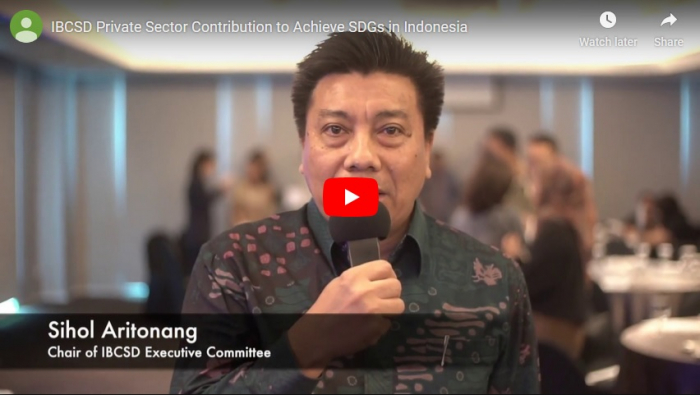
Private Sector Contribution to Achieve SDGs in Indonesia

Private Sector Contribution to Achieve SDGs in Indonesia

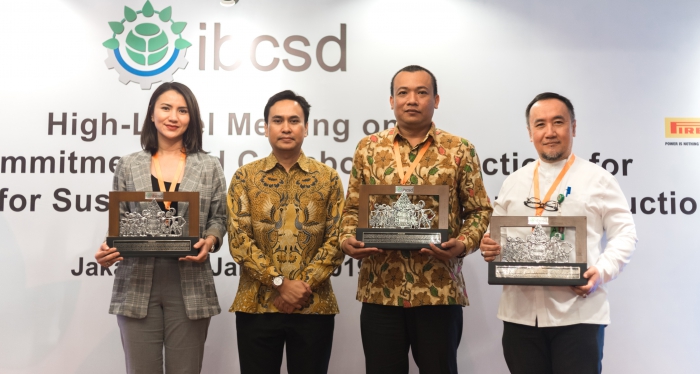
According to the Better Business, Better World report (2017), US$12 trillion of additional market value could be unlocked by 2030 if the SDGs are successfully implemented, creating 380 million jobs in the process. Have private sector done enough actions for the SDGs? In seeking for the answer to this question,  Indonesia Business Council for Sustainable Development (IBCSD) conducted a knowledge sharing session with the theme of “Private Sector Contribution to achieve SDGs in Indonesia” at Hotel JS Luwansa on 19 September 2019.

“SDGs will not be achieved without the leadership of private companies because they have the resources, specialized skills, cutting edge technologies and innovations,” stated Ms. Shinta W. Kamdani, the President of IBCSD in her welcoming remarks. She went on to add “Call  for action” to motivate the leaders of private companies to take action on the implementation of SDGs.

Over 60 participants from the IBCSD Members companies, Government, NGOs and civil society partners attended the event. The highlight of the event was the publication of Companies’ SDG Best Practices Book which consists of 59 stories from 24 IBCSD member companies. This book resulted as the fruit of SDG Working Group launched last year. The significance of this book lies not only in its implications but also the fact that it is the first book of Indonesia SDG series which showcase private sector’s best practices.

In continuation, the knowledge sharing session in the format of short individual presentation and panel discussion took place as the main agenda. Six of the best practices from the book which align with the voluntary national reporting (VNR) as stated by the Bappenas were shared with the audience. The panel discussion was lively with the active participation of the audience and proved to be a substantive and impactful discussion.

IBCSD hopes to further carry on the momentum of the private sector contribution to SDGs in Indonesia through various of its programs and joint collaborations with members, partners and colleagues. “Partnership for the goal, that is the key to actually tackling the SDGs” emphasized Ms. Indah Budiani, the executive director of IBCSD, as she closed the event.

For more info:  Visit www.ibcsd.or.id  Follow @ibcsd_official

Try Building Your Career in Sustainability With APRIL

Leading in sustainable business requires companies to navigate the increasingly complex links between economic, environmental and social spheres. In APRIL, the company wants to develop leaders who are able to tackle the sustainability challenges of tomorrow.

The applications for the APRIL Sustainability Professional Development Programme 2019 is currently open. Over the course of the 18-month programme, candidates will have the unique opportunity to take on sustainability-related roles across APRIL’s operations, understanding sustainability as it relates to the company in various scopes through three distinct rotations.

Interested applicants can find out more about the program in https://www.aprilasia.com/en/sustainability-professional-development-programme  

APP Sustainable Practices

One of IBCSD’s member group, Asian Pulp and Paper, recently partnered with Discovery Science Channel to do a feature in Tomorrow’s World Today to showcase how APP incorporates sustainable practices within its entire operation and its impact on the global business.

The video takes us through APP’s operations from the nurseries and plantations to the pulp and paper making process while also showcasing APP’s successful community programs. The episode also highlights APP’s fully sustainable solution to plastic waste with APP’s FooPak packaging. This feature will be able to prominently highlight the efforts of APP and how the company have bench marked themselves against global standards and performance indicators across all aspects of APP’s business and push the company to exceed these goals.

Learn What REPAL Indonesia did

Their zero waste pallets are made from 100% waste plastic using Re>Pal’s unique ThermoFusion™ technology process. Their pallets offer businesses improved profitability while acting sustainably through leveraging the low energy, environmentally friendly, and a cost-effective solution.
Re>Pal manages and supplies its superior pallets to many global and domestic suppliers, including Unilever, IndoFood, Nestle and IFF — businesses interested in offsetting their carbon footprint without compromising on quality or profitability.
An independent life cycle assessment conducted by Edge Environment research company has demonstrated that Re>Pal pallets have the lowest environmental impact when compared with functionally equivalent pallet alternatives.

Indonesia Timber Trade Transparency Workshop

Sigit Pramono, Head of Sub-Directorate for Notification of Export and Import of Industrial Forest Products, Ministry of Environment and Forestry said that the transparency in the implementation of timber legality assurance system in Indonesia has improved significantly, despite rampant illegal logging in the past. “Export value of certified wood products increased from USD 6.1 billion (2013) to USD 12.13 billion in 2018”, said Sigit Pramono.

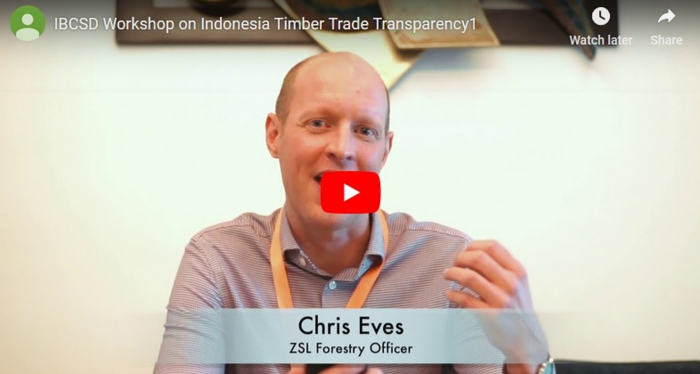
Head of Footprint and Social Compliance, PT APP Sinarmas, Sera Noviany shared the private sector commitment for transparency in the pulp and paper industry. “Transparency is important to foster trust from our stakeholders”, said Sera. NGOs have also contributed to the improved transparency of the Indonesia forestry sector. Mohamad Kosar (JPIK) underlined the room for improvement in the public access on the forestry sector data. Teguh Triono (ZSL Indonesia) shared the piloting on integrated landscape management for sustainability through KELOLA Sendang Project. And Chris Eves (ZSL London) promoted SPOTT online platform consisting 131 detailed indicators to assess timber and pulp producers and traders on the public disclosure of their policies, operations and commitments to environmental, social and governance best practices.

The event report, can be downloaded at the bottom of this page: https://www.spott.org/news/forestry-transparency-forums-tackle-illegal-tropical-timber-production-and-trade/

WBCSD Council Meeting 2018

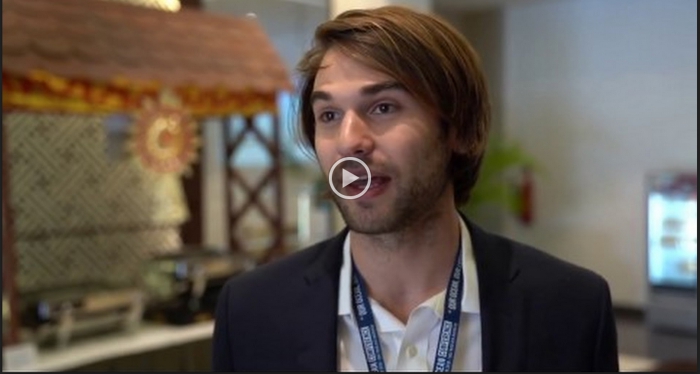
“The business case for sustainability is getting clearer. It’s now about how to integrate it into the strategy of a company, how do we make sure that the way we make money also serves the sustainability agenda.” –Petter Bakker, President & CEO of WBCSD at the WBCSD Council Meeting, Singapore 2018 (22-25 October 2018).

Our Ocean Youth Leadership Summit 2018

Indonesia Business Council for Sustainable Development (IBCSD) was supporting the Our Ocean Youth Leadership Summit 2018, partnering with the Sustainable Ocean Alliance. 200 talented and bright future leaders from around the world were there to pitch in their ideas on how to make our ocean sustainable. They also got the chance to learn from the companies, expertise in ocean sustainability issues. The event itself was held as a side event of the Our Ocean Conference in Nusa Dua Bali, from 29th to 31st of October.